10th Air Force Patch
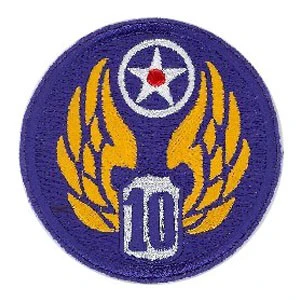
Complete your collection with the WWII-era 10th Air Force Patch. This fully embroidered, sew-on design delivers crisp period styling for jackets, shadow boxes, or reenactment gear. Measures 3 inches in diameter, sew-on application.
The 10th Air Force was the primary American tactical air arm in the China-Burma-India (CBI) theater, a region defined by some of the most grueling environmental conditions of World War II. Activated in early 1942 with a meager handful of bombers, it was tasked with the monumental dual mission of defending the "Hump" airlift over the Himalayas and providing close air support for Allied ground forces reclaiming Burma. Its units, such as the famous "Burma Bridge Busters" of the 490th Bombardment Squadron, became legendary for their precision skip-bombing techniques that paralyzed Japanese rail and supply lines. Despite being one of the smallest and most supply-starved numbered air forces, the 10th successfully integrated with British and Chinese forces to maintain a vital lifeline to China, eventually shifting its headquarters deep into Burma and China as the Japanese retreat accelerated.
Product Information
Product Information
Shipping & Returns
Shipping & Returns
Description
Complete your collection with the WWII-era 10th Air Force Patch. This fully embroidered, sew-on design delivers crisp period styling for jackets, shadow boxes, or reenactment gear. Measures 3 inches in diameter, sew-on application.
The 10th Air Force was the primary American tactical air arm in the China-Burma-India (CBI) theater, a region defined by some of the most grueling environmental conditions of World War II. Activated in early 1942 with a meager handful of bombers, it was tasked with the monumental dual mission of defending the "Hump" airlift over the Himalayas and providing close air support for Allied ground forces reclaiming Burma. Its units, such as the famous "Burma Bridge Busters" of the 490th Bombardment Squadron, became legendary for their precision skip-bombing techniques that paralyzed Japanese rail and supply lines. Despite being one of the smallest and most supply-starved numbered air forces, the 10th successfully integrated with British and Chinese forces to maintain a vital lifeline to China, eventually shifting its headquarters deep into Burma and China as the Japanese retreat accelerated.